
Description of the Rumurus design

…
- rurmus project -
design concept
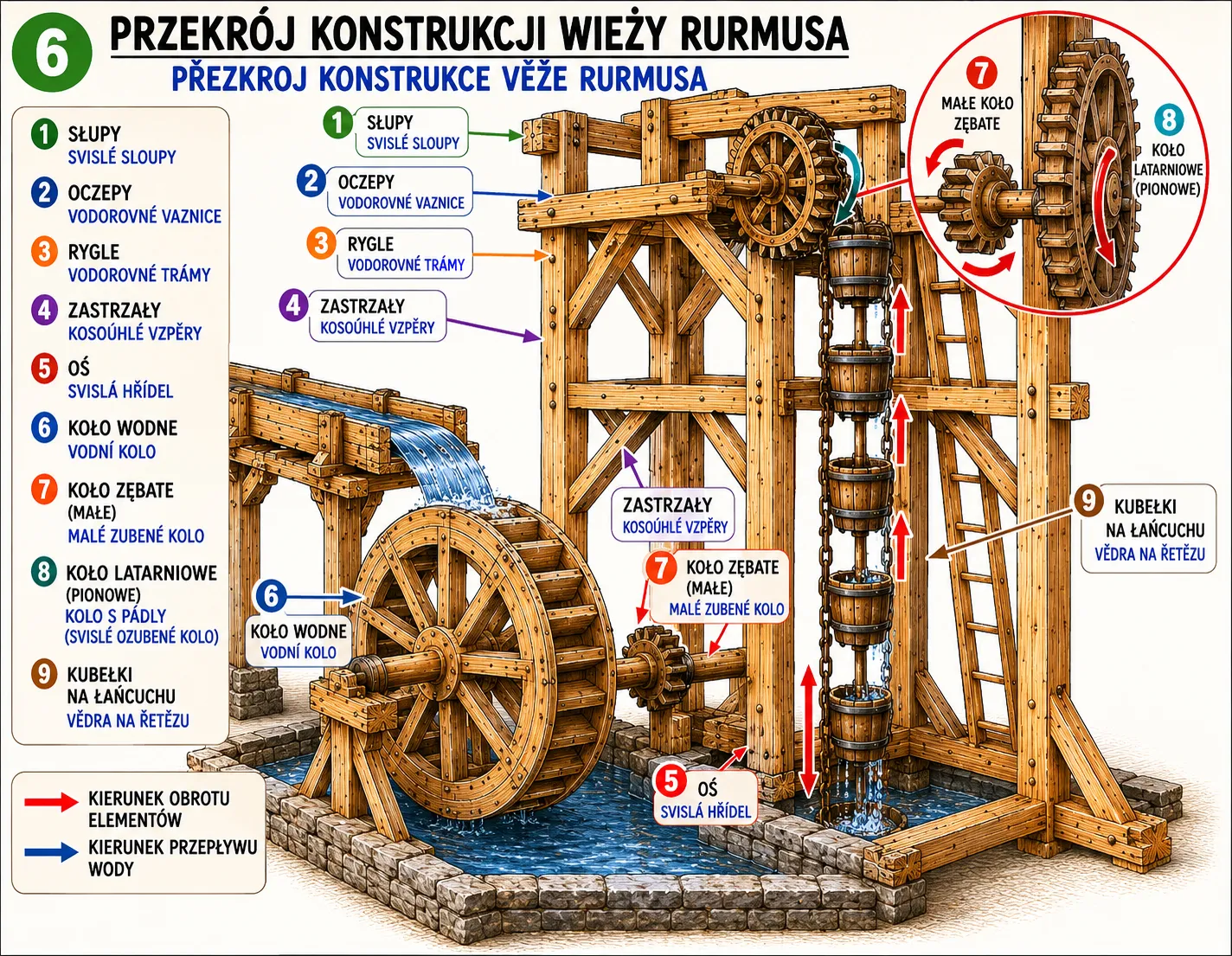
The Rurmus structure consists of a series of load-bearing, bracing, and mechanical components that collectively form a cohesive system capable of transferring loads and ensuring the proper functioning of the entire device. Each component performs a specific function and has been designed with both structural strength and manufacturing requirements in mind.
Load-bearing columns serve as the primary structural elements. These vertical members transfer loads from the entire structure to the foundation. They are made of large-cross-section structural timber, ensuring adequate rigidity and resistance to deformation. Their placement at the corners of the structure allows for the even distribution of forces and stabilizes the entire system.
Another key element consists of horizontal beams that connect the columns and form structural frames. These beams transfer horizontal loads and provide lateral stability to the structure. Depending on their mounting level, they can serve various functions, such as supporting mechanical components or bracing the structure.
Cross-rails are horizontal elements with a smaller cross-section that provide additional structural reinforcement. Their function is to limit displacement between columns and ensure stability in the horizontal plane. Mounted at various heights, they work in conjunction with the beams and diagonal braces.
Top plates are the upper elements that tie the columns together and cap the structure. They transfer forces between individual components and serve as a mounting base for subsequent parts of the structure, including mechanical elements. Their proper construction is crucial for the stability of the entire system.
Rumurus in Osiek
- rurmus project -
structural elements
Diagonal braces serve as structural stiffening elements. Installed between posts and beams, they counteract deformations caused by horizontal and dynamic forces. These braces enhance the structure’s spatial rigidity and prevent tilting.
The foundation, though made of a material other than wood, is an integral part of the structure. It typically takes the form of a concrete slab that transfers loads to the ground. The foundation ensures a stable base and protects the structure against settlement and shifting.
The water wheel axle is a key mechanical component. It is responsible for transmitting torque and maintaining the wheel in the correct position. The axle must be made of high-strength material and mounted in a way that allows for free rotation.
The axle bearing assembly serves to reduce resistance to movement. Depending on the design, plain bearings or rolling-element bearings may be used. Their function is to ensure smooth mechanism operation and minimize component wear.
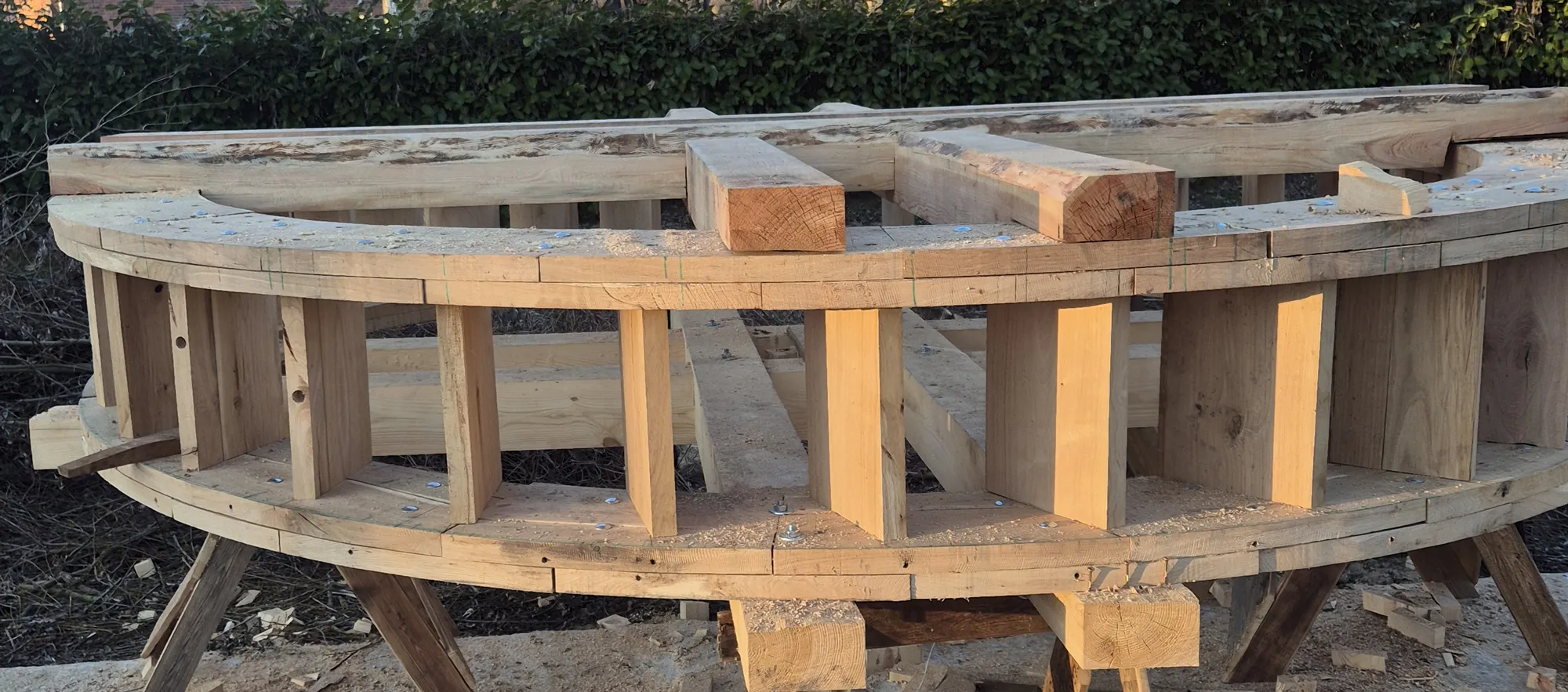
The water wheel is the system’s primary working component. It consists of a rim, spokes, and either paddles or buckets. The wheel’s design must ensure structural strength and the ability to withstand loads imposed by the water. The shape and number of components directly influence operational efficiency.
Buckets or paddles serve as the working elements of the water wheel. Their function is to capture water and generate driving force. Buckets also enable the lifting of water to a higher level. Their shape and arrangement are crucial to the system’s performance. The water supply channel is the component responsible for directing water onto the water wheel. It may take the form of an open trough or a closed conduit. Its purpose is to ensure a steady flow of water and minimize losses.
The upper reservoir serves as the receiving point for the water transported by the mechanism. Its function is to store water for subsequent use. The reservoir’s design must ensure watertightness and adequate capacity.
Rumurus w Osieku
- rurmus project -
traditional construction techniques
Water-conveying elements, such as troughs and conduits, are responsible for transporting water through the system. Their function is to direct the flow and minimize losses. Traditional designs utilized wooden pipes made from hollowed-out logs.
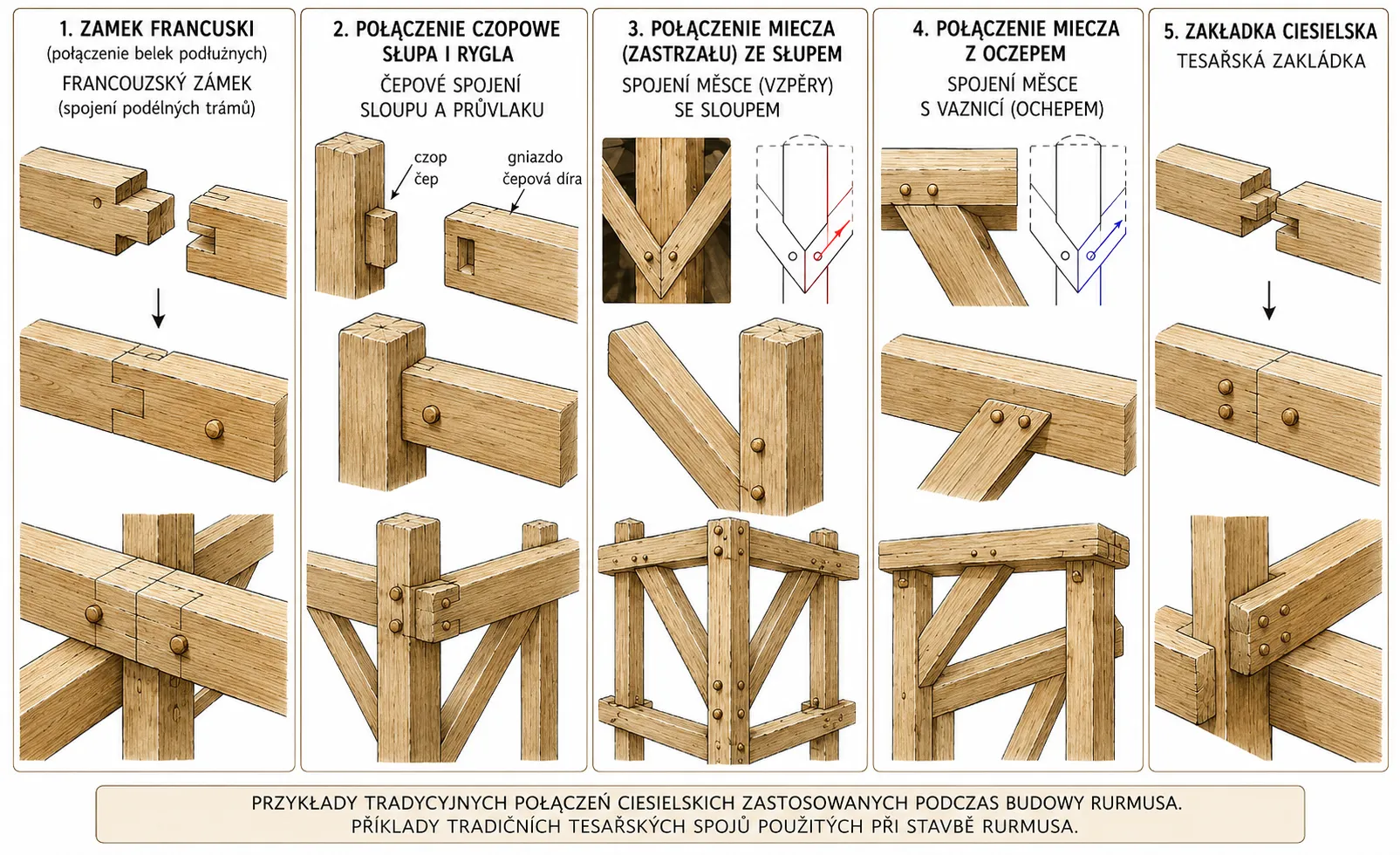
Carpentry joints are a crucial component of the wooden structure. They take the form of tenons, notches, and other timber-joining techniques, ensuring durable and stable connections without the need for extensive metal hardware.
Wooden pegs serve as additional reinforcement for the joints, immobilizing the components and preventing displacement. These pegs enhance the structure’s durability and stability.
Auxiliary elements, such as supports and guides, play a supplementary role. They support the main structural components and ensure the proper functioning of mechanisms, thereby improving the system’s overall functionality.
The entire structure relies on the interplay of all the aforementioned elements. Each component plays a specific role and influences the device’s operation. Proper design and execution of these structural elements are essential for the durability and efficiency of the Rurmus.
The structural elements are designed to be visible to users. The open structure allows people to understand the function and operating principles of the components, serving as a key educational feature of the installation.
The Rurmus structure exemplifies the application of traditional construction techniques in a modern project. The use of wood and classic carpentry joints results in a durable, aesthetically pleasing installation with significant educational value.
- Education - Folklore - Culture -
Contact us—we have the knowledge, experience, and international connections.
Together, we will develop and implement your idea.