
Why We Built Rurmus
…
- project rurmus -
Idea
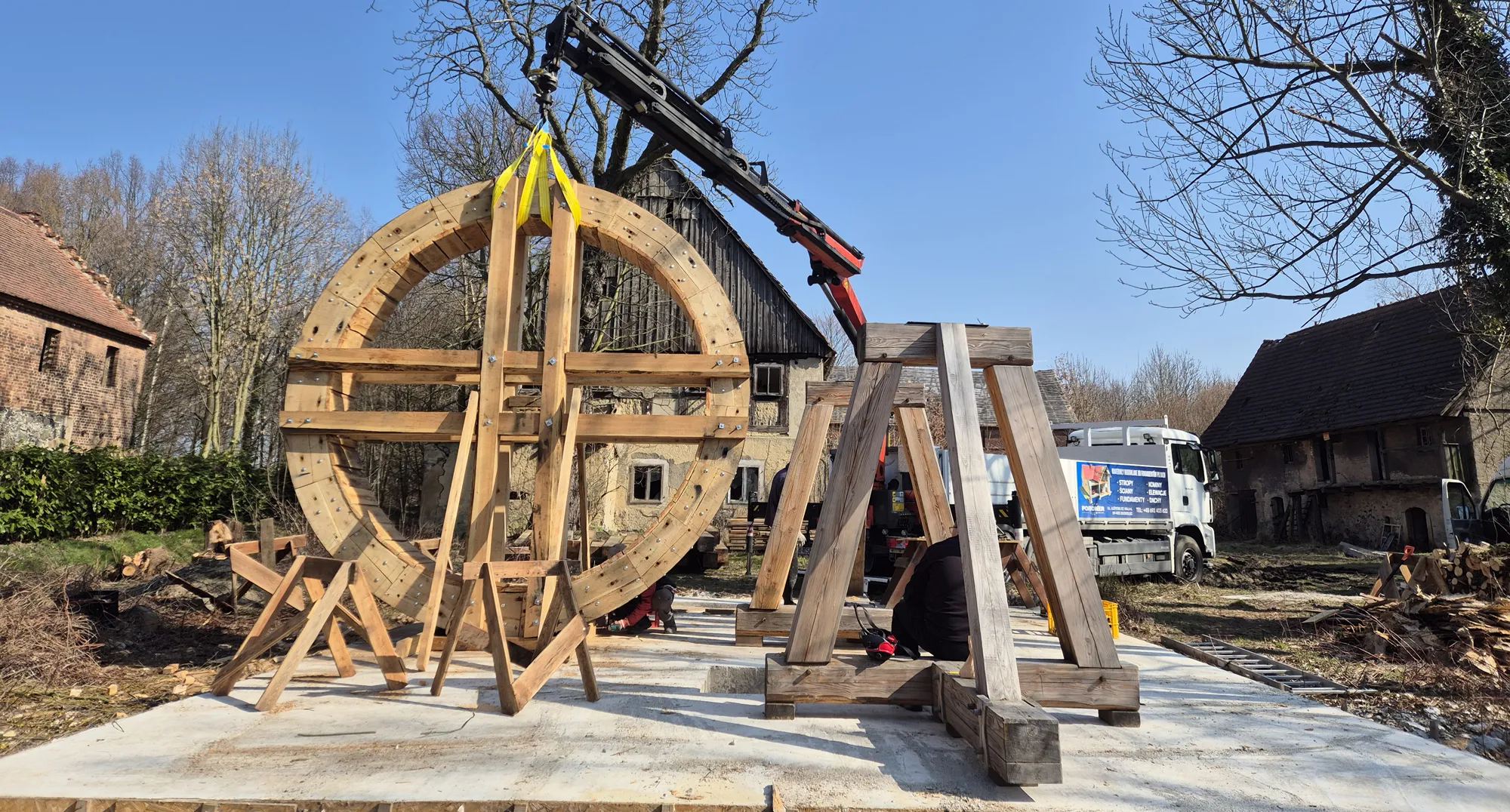
The *Rurmus* was not created merely as a standalone tourist attraction. It was built in Osiek Łużycki, on the grounds of the Kuźnia Foundation, as the first stage of a broader vision focused on preserving technical heritage and traditional crafts, as well as educating local residents and tourists.
The idea for its construction had been taking shape for years. It was inspired by historical technical solutions employed by artisans, millers, carpenters, blacksmiths, and builders who knew how to harness water power without the use of electricity. An interest in traditional trades and historical construction techniques was a primary factor in the decision to reconstruct this type of device.
The *Rurmus* is the first component of a larger project being developed at the *Zagroda Łużycka* (Lusatian Farmstead). Its purpose extends beyond simply lifting water; in the future, it will serve as a power source for additional educational and demonstration installations, using water energy to operate mechanisms and figures depicting traditional crafts.
Plans are in place to create a set of water-powered moving figures representing, among others, a blacksmith, a carpenter, a joiner, a potter, a baker, a cooper, and other traditional professions linked to the region’s history.
This will allow visitors to see not only the mechanism itself but also the working methods of artisans from the past.
Concurrently, a new Tourist Information building is being constructed to serve as the educational hub for the entire complex. It will house an exhibition dedicated to historical techniques in joinery, carpentry, blacksmithing, and construction. It will be a place combining traditional exhibits with modern forms of presentation.
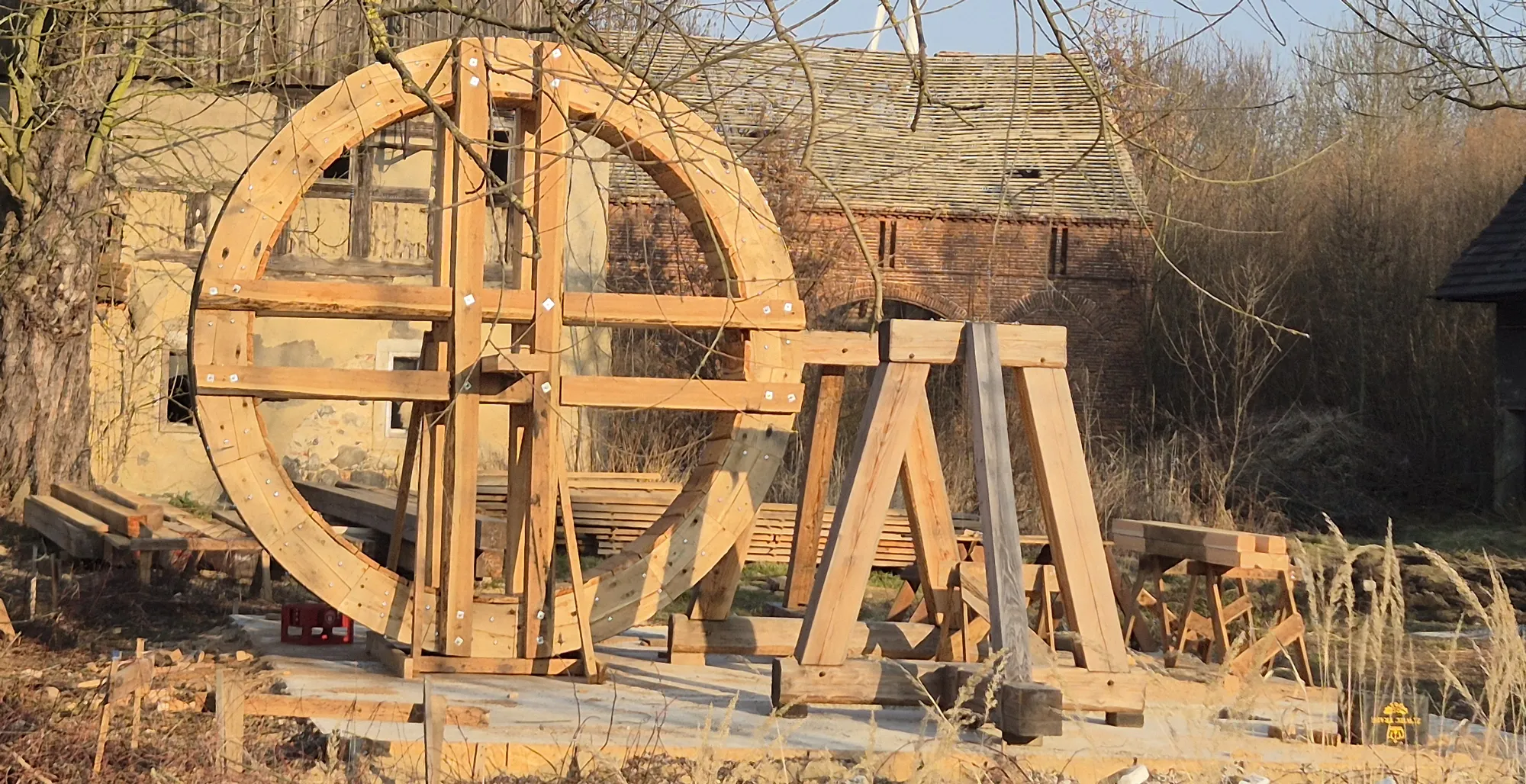
Rumurus in Osiek
- project rurmus -
meeting place
For many years, the Kuźnia Foundation has also been developing digital methods for showcasing cultural heritage. Previous projects resulted in the creation of virtual tour systems and online educational materials. This allows tourists to explore the region’s history both virtually and through in-person visits to the Lusatian Farmstead (Zagroda Łużycka).
The entire site is designed as a meeting place for residents of Poland, the Czech Republic, and Germany. Cross-border cooperation is a cornerstone of the project, exemplified by the partnership with the organization Societas Amicuum Liberec (SAL), z.s.
Future development plans include adding features related to water education, water retention, environmental protection, the history of technology, and traditional trades. Plans also include a free bicycle repair station, rest areas for tourists, a campfire site, and infrastructure to host meetings, workshops, and international events.
Thus, the *Rurmus* is more than just a reconstruction of a historical device; it marks the beginning of a larger project aimed at creating a space that demonstrates historical water usage and traditional craftsmanship, while integrating history, education, tourism, and international cooperation.
- Education - Folklore - Culture -
Contact us—we have the knowledge, experience, and international connections.
Together, we will develop and implement your idea.